
Overview of Deduction Types
Retailers and distributors take deductions for many different reasons. Understanding the type of deduction is important because it determines:
- How the deduction should be validated
- What supporting documentation to review
- Whether the deduction should be cleared, written off, disputed, or sent for review
Not all deductions are handled the same way. Some relate to planned promotions, while others are operational charges, shortages, or compliance penalties.
Trade & Promotional Deductions
Trade deductions are tied to promotional activity that your company planned and approved. These are generally expected deductions and are typically matched to promotions in Vividly.
MCB, Billbacks & Scanbacks
These deductions occur when a retailer or distributor recovers promotional funding that was agreed to as part of a promotion.
Common Examples
- MCB (Manufacturer Chargeback)
- Billbacks
- Scanbacks
- Distributor promotional funding
How to Handle
Use the Vividly scanner to break out, unit spend rates, customer, product group, and promotional dates.
Use Auto matcher or manually search for planned promotion, If the deduction aligns with an approved promotion, match and clear it to the appropriate promotion line.
If no matching promotion exists, route the deduction to Sales Review for validation.
Off Invoice & Price Reduction Programs
These deductions occur when a retailer or distributor receives promotional funding through a reduced purchase price rather than a reimbursement after the sale.
Common Examples
- Off Invoice (OI)
- EDLP (Everyday Low Price)
- EDLC (Everyday Low Cost)
- TPR (Temporary Price Reduction)
How to Handle
Use the Vividly scanner to break out, unit spend rates, customer, product group, and promotional dates.
Use Auto matcher or manually search for planned promotion, If the deduction aligns with an approved promotion, match and clear it to the appropriate promotion line.
If the deduction cannot be tied to an approved program, route it for review.
Advertising & Merchandising Programs
These deductions occur when a retailer charges for advertising, displays, merchandising support, or promotional placement.
Common Examples
- Ad Fees
- Circular Ads
- Digital Ads
- Display Fees
- Endcaps
- Features
How to Handle
Search for planned promotion or review the promotional agreement and supporting documentation to confirm the activity occurred as planned.
If valid, match and clear the deduction to the corresponding promotion.
If unsupported or unexpected, route for review.
New Item & Placement Fees
These deductions occur when a retailer charges for adding products to distribution or securing shelf placement.
Common Examples
- Slotting Fees
- New Item Fees
- Free Fill Programs
- Distribution Expansion Fees
How to Handle
Search for planned promotion or review customer agreements and approved funding commitments.
If the fee was approved as part of a planned program, clear it to the appropriate promotion.
If the charge was not approved or cannot be validated, route it for review.
Note: Remember to check your invoice line checkbox → Click on Auto Match to Promo or Search for Promotion Line → Confirm the match accordingly to each process
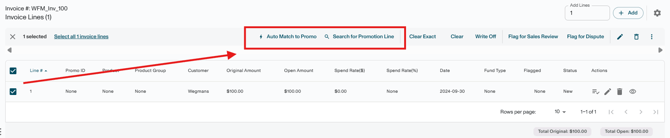
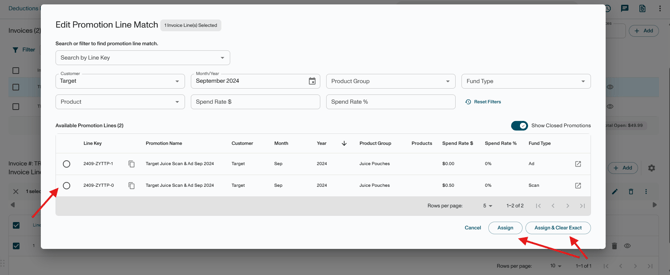
If no matching promotion exists, route the deduction to Sales Review for validation.
Non-Trade & Operational Deductions
Non-trade deductions are not tied to planned promotional activity. They typically originate from operational issues, customer claims, compliance penalties, or administrative charges and are often written off, disputed, or routed for review.
Shortages, Damages & Returns
These deductions occur when a retailer or distributor claims they did not receive product as invoiced or received product that could not be sold.
Common Examples
- Shortages
- Damages
- Returns
- Spoilage
- Unsaleables
How to Handle
Review supporting documentation such as:
- Proof of Delivery (POD)
- Bill of Lading (BOL)
- Customer claim documentation
- Return authorization paperwork
If the claim is valid, write the deduction off to the appropriate GL account or designated placeholder promotion based on company policy.
If the claim cannot be validated or appears incorrect, route it for review or dispute.
Pricing Disputes
These deductions occur when a retailer or distributor believes they were charged the wrong cost or price.
Common Examples
- Pricing discrepancies
- Cost differences
- Unauthorized pricing claims
- Cost allowance disputes
How to Handle
Review:
- Customer agreements
- Purchase orders
- Invoice pricing
- Promotional calendars
- Cost sheets
If the pricing difference was approved, clear the deduction to the appropriate promotion.
If the pricing was not approved, dispute the deduction or follow your company's write-off policy.
Compliance & Operational Fees
These deductions are penalties or fees related to operational performance rather than promotional activity.
Common Examples
- OTIF penalties
- Routing violations
- Labeling violations
- ASN violations
- Administrative fees
- Freight allowances
- Pickup allowances
How to Handle
Review customer compliance documentation and supporting backup to determine whether the charge is valid.
Most companies either:
- Write these deductions off directly to a designated GL account, or
- Route them for review before determining whether they should be disputed
Because these deductions are generally not tied to promotional activity, they are usually not matched to promotions.
Administrative & Processing Fees
These deductions are charges assessed by retailers or distributors for administering programs, invoices, or deductions.
Common Examples
- Administrative fees
- Service fees
- Processing fees
- Handling fees
How to Handle
Review customer agreements to determine whether the fee was contractually agreed upon.
If valid, write the deduction off according to company policy or clear it to a designated non-trade bucket.
If the fee appears incorrect or unsupported, route it for review or dispute.
Miscellaneous Customer Claims
These deductions do not fit neatly into a standard trade or operational category and often require additional investigation.
Common Examples
- Post audits
- Intro allowances
- Miscellaneous retailer claims
- Unidentified deductions
How to Handle
Review all available backup and customer documentation.
If the deduction cannot be validated, route it to Sales Review for investigation. Once validated, either clear, write off, or dispute the deduction based on company policy.
Note: For many Non-Trade & Operational Deductions, you may choose to clear deductions to a designated placeholder promotion instead of writing them off directly to a GL account.
Using placeholders can provide better visibility and reporting by allowing you to group and track recurring deduction categories such as Administrative Fees, Returns & Spoilage, Compliance Charges, Freight Allowances, or other operational expenses. This makes it easier to identify trends, monitor spend over time, and report on deduction activity.
Whether you use placeholder promotions or write-offs depends on your company's accounting and reporting preferences.
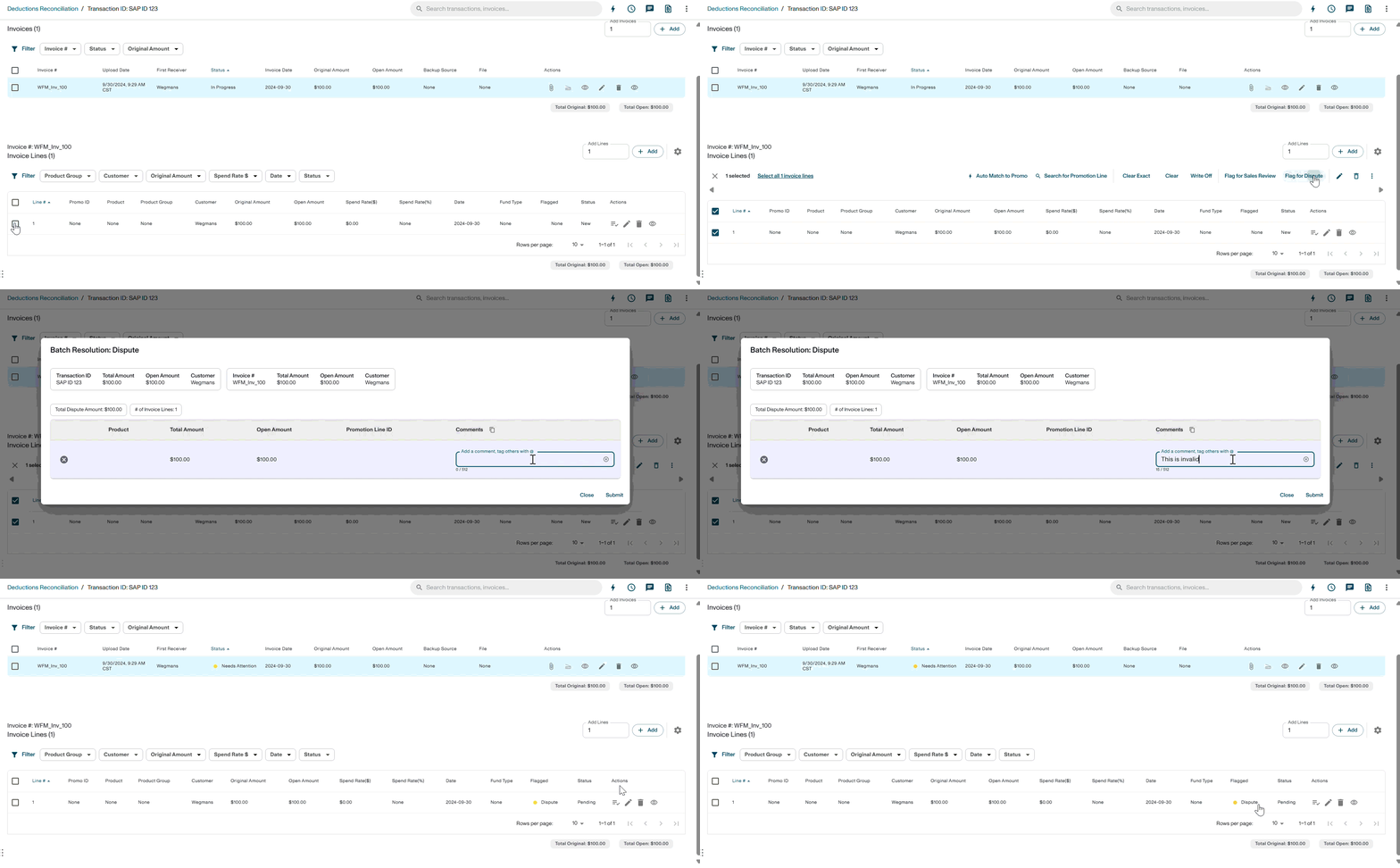
Note: Remember to check your invoice line checkbox → Click on Flag for Sales Review or Flag for Dispute → Click on Submit after adding a comment
Quick Reference Guide
| Deduction Category | Common Examples | Typical Action |
|---|---|---|
| Trade Promotions | MCB, Billbacks, Scanbacks | Match to a promotion and Clear |
| Price Reduction Programs | Off Invoice (OI), EDLP, EDLC, TPR | Match to a promotion and Clear |
| Advertising & Merchandising | Ad Fees, Display Fees, Endcaps, Features | Match to a promotion and Clear |
| New Item & Placement Fees | Slotting, Free Fill, New Item Fees | Match to a promotion or route for Review |
| Shortages, Damages & Returns | Shortages, Damages, Returns, Spoilage, Unsaleables | Review, Write Off, or Dispute |
| Pricing Disputes | Pricing Claims, Cost Differences | Clear, Write Off, or Dispute |
| Compliance & Operational Fees | OTIF, Routing Violations, Freight, Labeling Violations | Write Off or Dispute |
| Administrative & Processing Fees | Admin Fees, Service Fees, Handling Fees | Write Off |
| Miscellaneous Customer Claims | Post Audits, Intro Allowances, Unidentified Claims | Review, then Clear, Write Off, or Dispute |
Key Takeaways
- Trade deductions are usually promotional and should be matched to a promotion.
- Non-trade deductions are typically operational, compliance-related, or administrative and are often written off or disputed.
- Always review supporting documentation before resolving a deduction.
- When you are unsure how a deduction should be handled, route it to Sales Review for additional investigation.
The goal is not just to close the deduction, but to ensure it is categorized correctly for reporting, forecasting, and financial visibility